What This Guide Covers About Direct Drive Wind Generators
A wind turbine rotor turns slowly – somewhere between 10 and 20 revolutions per minute depending on the design. A conventional generator wants to spin much faster. For decades, the industry handled that mismatch with a gearbox. Direct drive designs take a different route: they connect the rotor straight to a generator built to run at low speed.
At BJA Magnetics, headquartered in Leominster, MA, we supply precision magnets and magnetic assemblies to engineers working on demanding power applications. The geared-versus-gearless question comes up a lot in those conversations, and the answer is rarely as clean as the sales literature suggests. This guide covers how direct drive generators actually work, where they hold up well, where they don’t, and what to think through before you land on a design path.
The Advantages of Direct Drive Generators at a Glance
Direct drive generators remove the gearbox and let the rotor spin the generator directly. That simplifies the drivetrain and changes the maintenance profile, but it also changes the size, weight, cost, and magnet requirements of the machine. Here are the main advantages, along with the trade-offs you need to weigh against them:
- Fewer moving parts. Removing the gearbox takes out one of the most maintenance-intensive components in a turbine drivetrain.
- Fewer service visits offshore. Less lubrication, fewer bearings – that matters when every service call requires a vessel and a weather window.
- Better partial-load behavior. Permanent magnet designs tend to hold efficiency when wind speeds drop below rated conditions, which is most of the time.
- Larger, heavier, and more expensive upfront. A direct drive generator needs a larger diameter and more magnet material to do the same job as a geared machine, which handles it more compactly.
- Magnet specification matters more than most people expect. Grade, coating, and temperature rating directly affect how long the generator performs in the field.
Direct Drive vs. Geared Generator: How the Two Designs Differ
In a geared turbine, the slow rotor shaft feeds into a multi-stage gearbox. The gearbox steps that rotation up to around 1,000 to 1,800 rpm so a compact, high-speed generator can produce power. It’s a well-understood arrangement that keeps the generator physically small and relatively straightforward to source.
A direct drive wind turbine generator connects the rotor hub straight to the generator, so both turn at the same low speed. To produce useful power at 15 rpm, the generator has to be physically wide, with many magnetic poles arranged around its circumference.
Both approaches work. The difference is where the design complexity lives – in the gearbox and its service requirements, or in the generator’s size and magnetic circuit.
Why Low-Speed, High-Torque Generators Need a Different Approach
Power equals torque times rotational speed. When speed is low, torque has to be high to deliver the same output – which is why low-speed, high-torque generators look so different from the compact high-speed machines in geared drivetrains.
A wide diameter provides mechanical leverage, and a high pole count allows the generator to produce the correct electrical frequency even at slow rotation. In our experience, this is where first-time designers tend to underestimate what’s involved.
Holding a consistent air gap across a stator that’s several meters in diameter requires a genuinely stiff structure and careful tolerancing. If that gap varies around the circumference, it shows up in both output and vibration.
The Permanent Magnet Direct Drive Generator
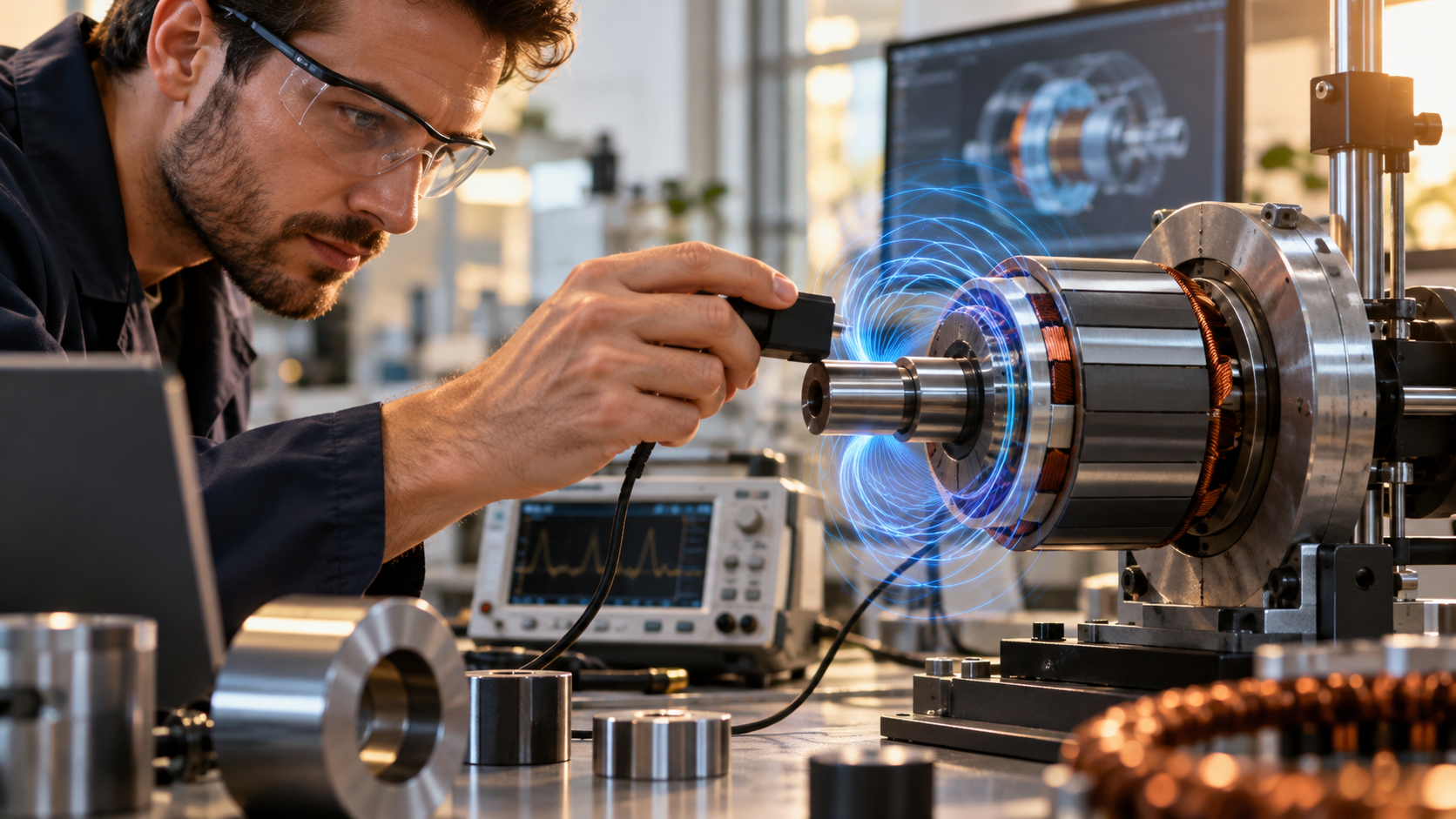
Many modern gearless turbines use a permanent magnet direct drive generator – often abbreviated PMDD or PMSG. Rather than using electrical windings on the rotor to generate a magnetic field, these machines mount rows of permanent magnets directly on the rotor surface.
Removing the excitation winding also removes the need for slip rings, brushes, and the power supply to feed them. Rotor electrical losses drop. The generator runs cleaner at partial load. The fixed magnetic field does require more careful attention to control and fault handling during design. Unlike a wound rotor machine, excitation can’t simply be reduced. However, for most offshore applications, the maintenance simplicity is worth that design work upfront.
Wind Turbine Generator Efficiency: Where the Gains Come From
Gear stages lose energy to friction and heat. Remove the gearbox, and those losses go with it, which is the core of the efficiency argument for direct drive.
The more practical story is what happens below rated wind speed. Turbines spend the majority of their operating hours in that range, and permanent magnet generators tend to stay efficient there. Gearbox losses, by contrast, are relatively constant regardless of output – so the efficiency gap between the two architectures often grows at light loads. And, over a full year of operation that adds up.
That said, efficiency figures vary significantly across specific machines. A well-engineered geared turbine will outperform a mediocre direct drive design.
Gearbox Maintenance & Long-Term Reliability
Talk to anyone who works on operating wind farms and gearbox maintenance surfaces quickly. Gearboxes carry large, variable loads over years of continuous operation. When a major internal component fails, getting the parts up into the nacelle – and sometimes the whole unit back to the ground – often means crane mobilization and extended downtime.
Offshore, those dynamics shift considerably. Weather windows for crew transfer vessels can close for days at a stretch. A nacelle that needs fewer interventions is worth a real premium, which is a major reason offshore developers have moved steadily toward direct drive over the past decade.
Common Questions About Direct Drive Generators
What is a direct drive generator?
A direct drive generator connects directly to the turbine rotor with no gearbox. The generator turns at the same low speed as the blades, so it’s built with a large diameter and many magnetic poles to produce usable electrical output at low rpm.
How does a direct drive wind turbine work without a gearbox?
The generator is designed to operate at rotor speed rather than stepping that speed up. A high pole count allows the machine to produce the correct electrical frequency at low rotation, and a power converter conditions the output to match grid requirements.
Are direct drive wind turbines more efficient?
Often, yes – particularly at partial load. Removing the gearbox eliminates mechanical losses that are present regardless of output level. Permanent magnet generators also tend to hold efficiency well below rated wind speed. How much of a difference you see depends on the specific machines being compared, so actual performance data matters more than architectural assumptions.
What are the disadvantages of direct drive generators?
Size, weight, and upfront cost are the main ones. Direct drive generators are physically large, which complicates nacelle design, transportation logistics, and installation. Permanent magnet versions also depend on rare earth materials, which introduces both cost variability and supply chain considerations.
Do all direct drive generators use permanent magnets?
No. Some manufacturers use electrically excited synchronous generators, which create the rotor field with copper windings rather than magnets. Those designs avoid rare-earth dependence but add rotor electrical losses and mechanical complexity through slip rings and the excitation system.
Why are neodymium magnets used in some direct drive generators?
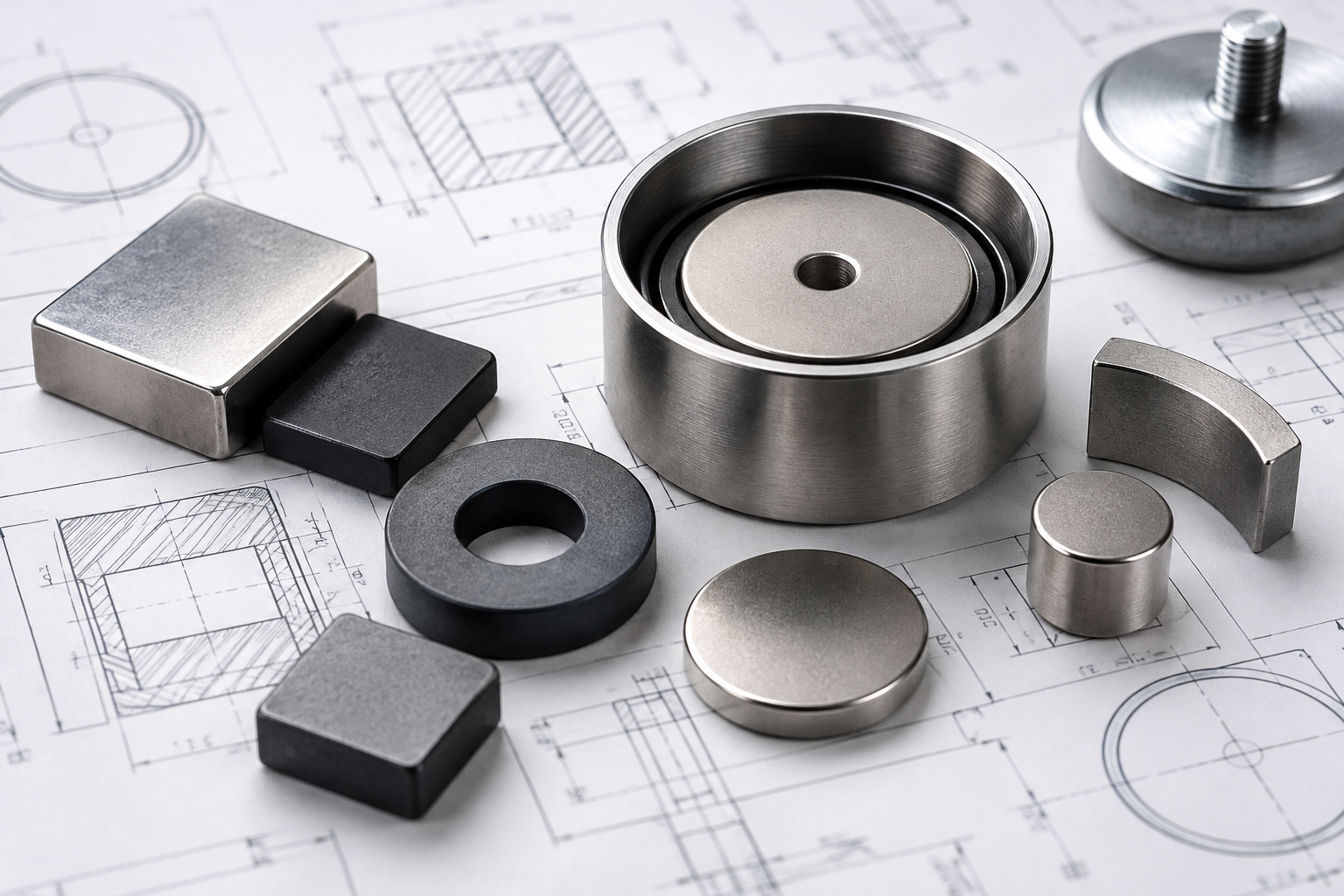
Neodymium magnets produce a strong field from a relatively small volume of material. That lets designers keep large, low-speed generators lighter than they would otherwise be. Getting the grade, coating, and temperature specification right for the operating environment is what determines whether that advantage holds up over the life of the machine.
Choose the Right Design for Your Wind Power Application
Direct drive generators make the most sense when maintenance access is genuinely difficult, and service costs are high – offshore being the clearest example. They ask more of the design team, particularly around structural stiffness, air gap management, and magnet specification. Whether the tradeoff is worth it depends on your site conditions, service model, and project timeline.
If permanent magnets are part of the design, the grade, coating, and assembly details will determine how well the generator holds up over years of operation. BJA Magnetics works with engineers and OEM teams to specify and supply magnets and magnetic assemblies for exactly these kinds of applications. Contact BJA Magnetics to talk through your generator project with our team.